Why trees need trimming
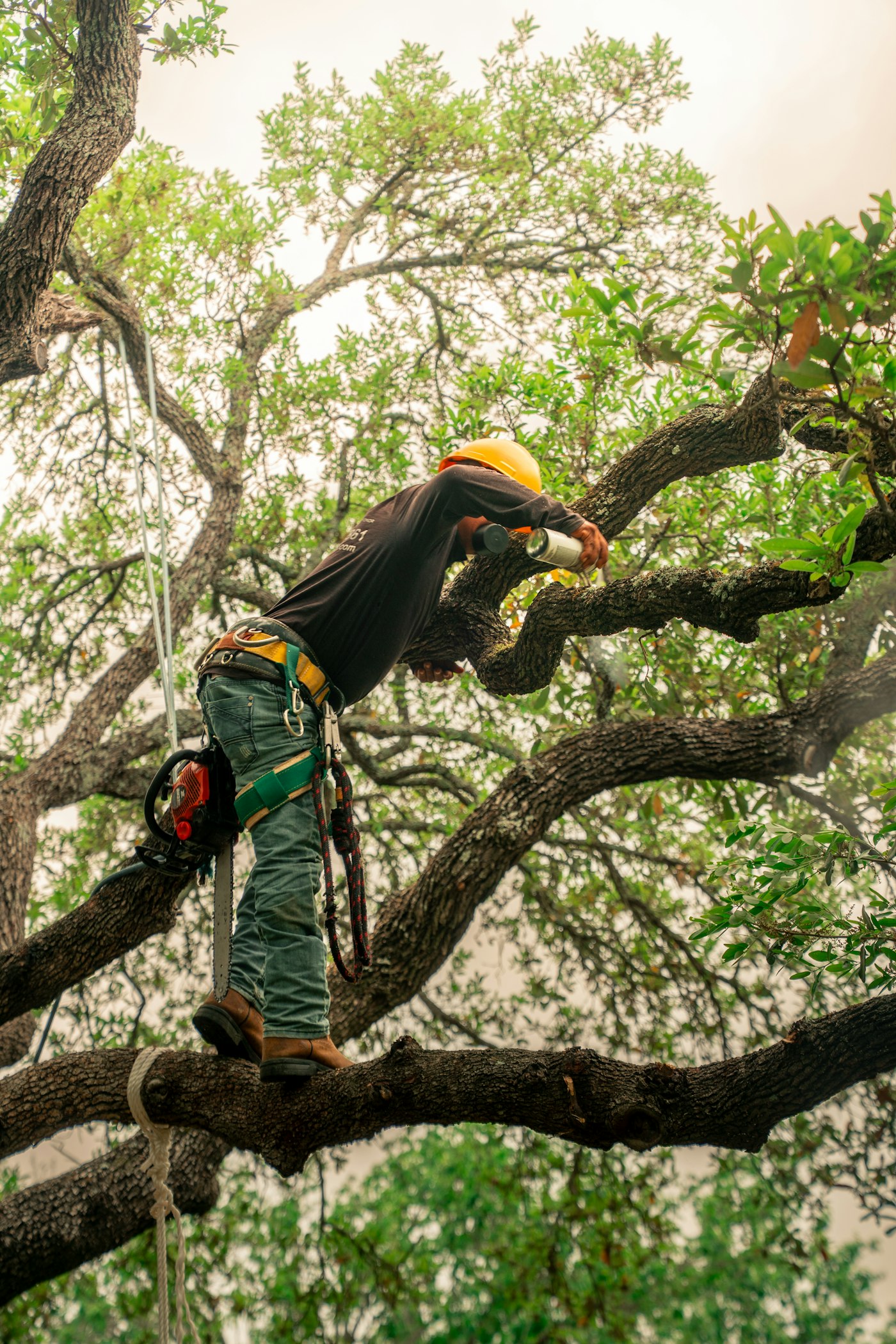
Trees don't grow with your house in mind. Left alone, they stretch over roofs, into service lines, and across the neighbor's fence. Dead limbs hang up in the crown waiting for the next windstorm to pick where they land. Water sprouts and crossing branches crowd the interior until the tree is fighting itself.
A good trim fixes all of that at once: the dangerous wood comes out, the weight comes off the over-extended limbs, and the tree gets its shape back.
What a proper trim includes
- Deadwooding, removing the dead and dying limbs before gravity does it for you
- Clearance, lifting the canopy off your roof, driveway, and walkways
- Weight reduction, shortening long, heavy limbs so storms have less to grab
- Shaping, thinning crossing and crowded branches so light and air move through the crown
- Cleanup, every cut branch hauled off and the yard raked, same standard as our removals
Trimming vs. topping
One thing we won't do is top a tree, chopping the whole crown flat. Topping looks like progress for a season, then the tree answers with a mess of weak, fast-growing shoots that are more dangerous than what you started with. Proper pruning cuts at the right spots so the tree heals clean and grows back the way you actually want.
When to trim
Dead or dangerous limbs: now, whatever the season. Routine shaping has more flexibility, and for most yard trees the dormant months make the structure easy to see and easy on the tree. If you're not sure what your tree needs, that's exactly what the free quote visit is for, we'll tell you straight if it needs a trim, a cable, or nothing at all this year.
If the trim reveals bigger problems, a hollow trunk, a split leader, we'll talk honestly about whether removal is the smarter money.